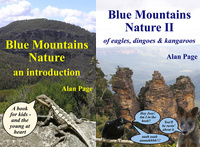

Blue Mountains Nature books

Waratah Software logo home    wildflowers    birds    about us    lizards & spiders
(click image to enlarge)
Waratah Software
Online
Bookstore

To order Waratah Software books, complete the form below and submit.

An invoice including postage will be sent to the email address entered.

Once the invoice is paid, the books will be packaged and lodged with Australia Post, and an Australia Post tracking number will be emailed to you.

Postage can only be determined once the order is requested as there are savings when multiple books are ordered. For example, two Blue Mountains Nature books can fit in one parcel.

As a guide, the total postage for one or two Blue Mountains Nature books will be $10, as will be the total postage for one Blue Mountains Wildflowers book. The total postage for all four books (shown below) will be $15.

If you wish to have the order changed or cancelled or have a query - just email Alan

* - compulsory field

Full name*
Email*
Postal Address*


Blue Mountains Nature - an introduction
by Alan Page,  published in 2023

$25 plus postage

Qty


Show more

(click image to see a larger version)

This is a book for children about the native animals and plants of Australia's Blue Mountains.

It's an introduction to the wonders of nature; an invitation to look and learn in their garden and in the bush.

The 100 page book describes over 70 common native species and includes 200 images.

It is presented as a personal diary with the description of each animal and plant followed by a suggestion of what to look for in their garden and the bush. A set of questions is then asked that can be ticked off.

Here's an example of the Echidna,  Eastern Spinebill,  Kookaburra  and  orchids pages.


Blue Mountains Nature II - of eagles, dingoes and kangaroos
by Alan Page,  published in 2024

$25 plus postage

Qty


Show more

(click image to see a larger version)

It contains an additional 100 Blue Mountains native species and 200 images that were not in Blue Mountains Nature - an introduction.

The book is written for children with the goal of getting them into their garden and the bush to look, listen and enjoy nature. Besides photos and drawings of animals and plants, it asks questions about their experience with Blue Mountains nature. Plus there's a few riddles.

As well as the animals mentioned in the book's title, it contains wallabies, platypuses, possums and robins - and of course ravens. There's also butterflies, spiders and frogs - and native lilies, irises and bottlebrushes.

Here's an example of the possums,  platypuses,  butterflies  and  spring wildflowers pages.


Blue Mountains Nature III - ferals
by Alan Page,  published in 2026

$25 plus postage

Qty


Show more

(click image to see a larger version)

This is the third in the Blue Mountains Nature series and describes 80 introduced and invasive animals, birds, insects and plants - feral species - that can be found in the Blue Mountains. There's over 180 images.

It is especially written for children and asks questions about what is a feral animal or plant, and does it belong in the Blue Mountains.

It includes native species that Australia has exported to the world like possums and the Tasmanian Blue Gum.

It reveals that mongooses were introduced into Australia, that goats have panoramic vision and that female aphids may be born pregnant.

The premise of the book is that to understand the impact on our native species we need to know about ferals. Know your enemy to know yourself.

Here's an example of the First Fleet, cats, foxes, Common Mynas, wasps, Patterson's Curse and Brush‑turkeys pages.


Blue Mountains Wildflowers - a journey of wonder
by Alan Page

$45 plus postage

Qty


Show more

(click image to see a larger version)

This book is a botanical autobiography. It presents the wildflowers the author has found over the last twenty years on a journey of wonder.

This book provides details and images of over 400 Blue Mountains wildflowers and about 40 introduced species. Threatened species have green text; introduced species have red text.

It has over 900 images with all but a handful taken by the author.

The plants are grouped into their botanical family and genus, with information about other family members.

The book aims to provide a pathway for those interested in learning more about Blue Mountains wildflowers and the joy and wonder to be gained by being able to talk to them on a first name basis.

Here's an example of the heaths,  peaflowers,  acacias,  irises and  banksias pages.


 top of page